
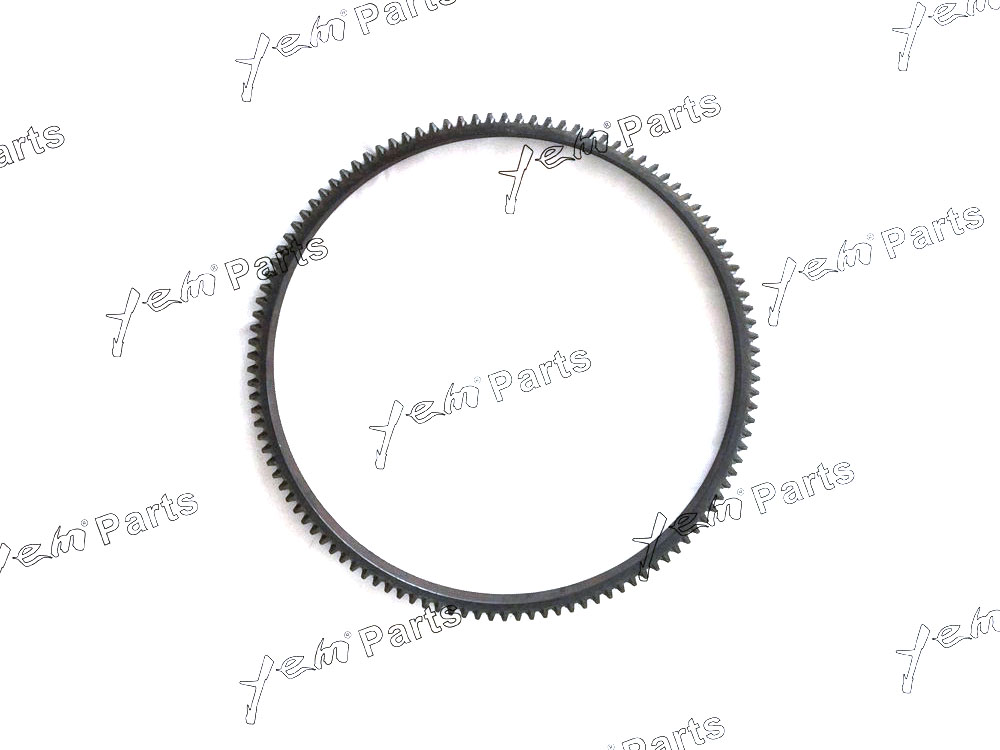
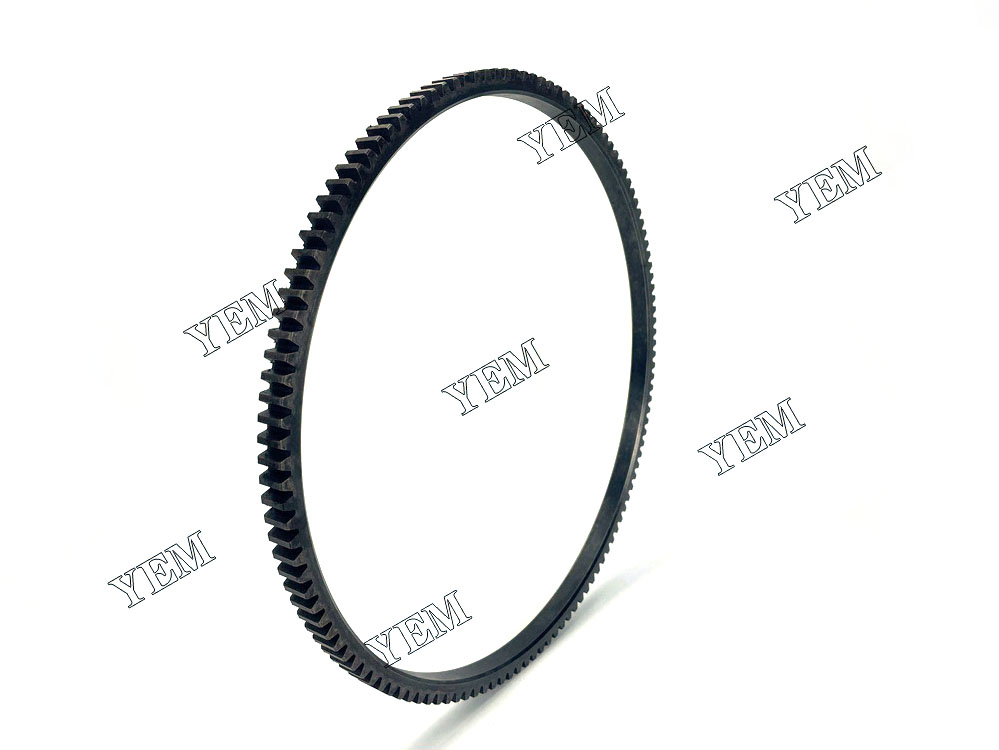
The engine flywheel is a critical component in the engine, usually located at the rear end of the crankshaft. It is a round or semi-circular gear that attaches to the end of the crankshaft and meshes with the starter or starter gear.
The engine flywheel teeth have the following main functions:
- Power transmission: When the engine is running, through the reciprocating motion of the connecting rod and piston, the explosive force generated by the combustion gas pushes the crankshaft to rotate. The flywheel teeth transfer this rotational power to other systems, such as a transmission or generator.
- Balance engine operation: The engine will generate some vibration and unbalanced forces during operation. The weight and position of the flywheel teeth can help balance and stabilize the rotation of the engine, reducing vibration and vibration and providing a smoother power delivery.
- Start the engine: the gear on the flywheel teeth meshes with the starter or starter gear. When the starter or starter is running, they turn the flywheel teeth, causing the crankshaft to spin, which starts the engine.
It should be noted that some modern cars use direct injection engine technology without flywheel teeth, known as “flywheel toothless systems”. These systems start the engine by using an electric motor or other device, rather than the traditional combination of starter and flywheel teeth.
Flywheel tooth materials and manufacturing processes
Engine flywheel teeth are usually made of high-strength steel, and commonly used materials include cast steel, forged steel, and alloy steel. These materials have good wear resistance, strength and corrosion resistance, and can withstand the requirements of high temperature and high speed rotation.
The manufacturing process of flywheel teeth generally includes the following steps:
- Material selection: Select the appropriate flywheel tooth material according to actual requirements, and ensure its quality and reliability.
- Steel billet processing: Cutting or other processing methods are performed on the selected steel material to obtain a billet of approximate shape for subsequent processing.
- Precision machining: Turning, milling, drilling and other processing operations are carried out on the billet by using precision equipment such as CNC machine tools to achieve the size, shape and surface quality required by the design.
- Heat treatment: Heat treatment of the processed flywheel teeth by heating and cooling to increase their hardness and strength, and improve the particle structure and internal stress distribution.
- Tooth surface processing: Use special gear processing equipment to perform grinding, hobbing or cutting processes on the tooth surface of the flywheel teeth to ensure the accuracy and meshing performance of the tooth surface.
- Inspection and adjustment: Use various inspection methods, such as ultrasonic, magnetic particle inspection, etc., to inspect the flywheel teeth, and adjust and correct the size as required to ensure its quality and reliability.
- Surface treatment: Anti-corrosion coating, chrome plating and other treatments are carried out on the surface of flywheel teeth according to needs to improve its corrosion resistance and appearance quality.
In short, the manufacturing process of flywheel teeth needs to go through multiple processing steps, including material selection, billet processing, precision machining, heat treatment, tooth surface processing, inspection and adjustment, and surface treatment, etc., to ensure that the final product has good mechanical properties and quality.
Design principles of engine flywheel teeth
The design principles of engine flywheel teeth mainly include the following points:
- Strength and durability: The flywheel teeth must have sufficient strength and durability to withstand the torque and vibration of the engine. It is usually manufactured from a high-strength metal material, such as cast iron or steel, to ensure that it can operate for a long time without damage.
- Weight and inertia: The weight and inertia of the flywheel teeth are critical to the performance and response of the engine. An overweight flywheel increases the inertial load on the engine, causing slower acceleration and deceleration. Therefore, the design needs to balance reducing weight and providing enough mass to store and release energy.
- Balance: The balance of flywheel teeth is also very important to reduce vibration and noise. Unbalanced flywheel teeth can cause engine vibration and even damage other related components. Therefore, precise balance adjustments must be made during the design and manufacturing process.
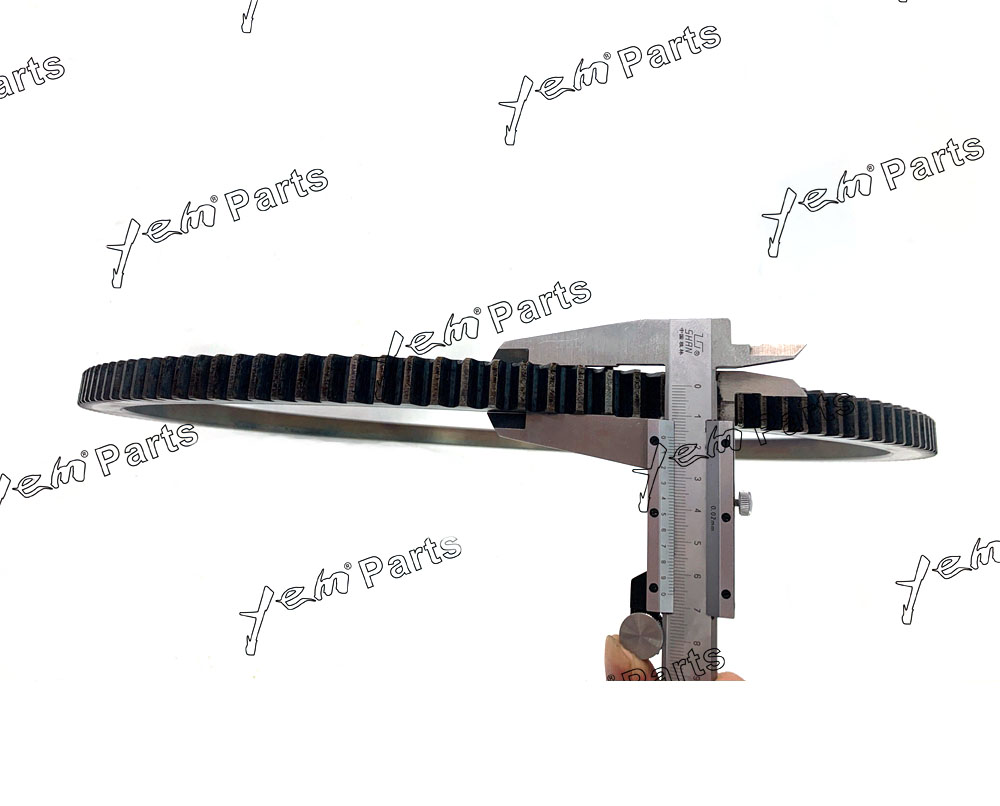
- Gear Geometry: The geometry and parameters of the flywheel teeth are critical to power transmission and smooth operation. Factors such as the modulus, number of teeth, and tooth profile of the gear need to be optimized according to the specific application and engine design requirements.
- Friction and wear: When the flywheel teeth come into contact with other transmission parts and transmit power, friction and wear will occur. Therefore, proper lubrication and surface treatment measures need to be considered in the design to reduce friction and extend the service life of gears.
- Safety: Flywheel teeth must be designed to be safe and reliable to prevent accidents. For example, appropriate protection measures are required to prevent gears from falling off or breaking and causing serious accidents.

In summary, the design principles of an engine flywheel tooth involve strength, durability, weight, inertia, balance, geometry, friction and wear, and safety, all of which are designed to ensure that the flywheel tooth can effectively transmit power and Keep the engine running normally.
Troubleshooting and repair of engine flywheel teeth
Engine flywheel teeth are an important part connecting the engine crankshaft and transmission system, used to transmit power and balance engine speed. If the engine flywheel teeth fail, it may cause problems such as the engine not starting, difficult to start, or producing abnormal noise. The following are some common conditions and repair methods for engine flywheel tooth failure:
- Flywheel tooth damage: If the flywheel tooth surface is worn or broken, the engine will not start normally. In this case, the entire flywheel tooth usually needs to be replaced.
- Loose flywheel teeth: If the flywheel teeth are loose or fall off, the connection between the transmission system and the engine will be lost, resulting in interruption of power transmission. At this time, it is necessary to check the fastening bolts of the flywheel teeth, and reinstall or replace the damaged flywheel teeth.
- Abnormal sound of the flywheel teeth: If the flywheel teeth produce abnormal noise, it may be caused by uneven wear of the tooth surface or excessive gap between the teeth. In this case, the flywheel teeth can be ground or adjusted to restore normal working conditions.
Servicing an engine flywheel usually requires specialized auto repair skills and equipment. If you experience an engine flywheel tooth failure, it is advisable to seek the help of an experienced auto mechanic who can fully diagnose the problem and take appropriate repairs. At the same time, regular maintenance and inspection of the engine and related components can reduce the occurrence of flywheel tooth failure.
Performance improvement and optimization of flywheel teeth
A flywheel tooth is a device used to store energy and transmit power, and its performance improvement and optimization can be achieved through the following aspects:
- Material selection: Selecting materials with high strength, low friction and high wear resistance can improve the performance of flywheel teeth. Common materials include steel, aluminum alloys, and composite materials. In addition, the use of surface treatment technologies such as hard coating, nitriding treatment, etc., can increase the hardness and surface smoothness of the material and reduce friction loss.
- Structural design: Optimizing the structure of flywheel teeth can improve its performance. For example, the gear transmission efficiency and motion stability can be improved by reducing the gear gap, increasing the gear module, and adjusting the tooth profile curve.
- Balance and vibration reduction: The flywheel teeth may produce unbalance and vibration when rotating at high speed, which will affect the transmission efficiency and service life. Taking balancing techniques such as static balancing and dynamic balancing, and vibration reduction measures such as adding vibration-absorbing materials or shock absorbers, etc., can reduce vibration noise and improve system stability.
- Lubrication and Cooling: Proper lubrication and cooling systems are critical to the performance of the flywheel teeth. A well-designed lubrication system can reduce friction loss, reduce temperature rise and prolong the life of parts. And the cooling system can effectively control the temperature to prevent overheating and thermal deformation.
- Manufacturing process: Optimizing the manufacturing process can improve the accuracy and quality of flywheel teeth. For example, advanced CNC machining equipment and precision measuring instruments are used to ensure the dimensional accuracy and surface quality of gears.
- Dynamic performance simulation and analysis: Using computer-aided design software for dynamic performance simulation and analysis, the influence of different design parameters on the performance of flywheel teeth can be evaluated and optimized adjustments can be made.
In summary, through the improvement and optimization of material selection, structural design, balance and vibration reduction, lubrication and cooling, manufacturing process, and dynamic performance simulation and analysis, the performance of flywheel teeth can be improved and the actual application requirements can be met.
New technologies, innovations and research hot spots in engine flywheel teeth, such as advanced materials, digital design and simulation
In terms of engine flywheel teeth, there are several new technologies, innovations and research hotspots worthy of attention, including advanced materials, digital design and simulation.
- Advanced Materials: Material selection for engine flywheel teeth is critical to performance. A new trend is to adopt advanced materials, such as high-strength steel, aluminum alloy, composite materials, etc., to achieve higher strength and lighter weight. This improves the engine’s efficiency and fuel economy.
- Digital design: Digital design technology has brought revolutionary changes to the design process of engine flywheel teeth. Computer-aided design (CAD) and computer-aided engineering (CAE) software allow engineers to perform precise modeling, analysis and optimization to improve the performance and reliability of flywheel teeth.
- Simulation technology: Simulation technology plays an important role in the research of engine flywheel teeth. By using finite element analysis (FEA) or multibody dynamics simulation software, it is possible to simulate various loading and vibration conditions to which flywheel teeth are subjected, and evaluate their strength, fatigue life and dynamic response. This can help optimize the design and reduce the need for actual testing.
In addition, there are other related research hotspots, such as:
- Surface treatment technology of flywheel teeth, such as carburizing, nitriding, etc., to improve their hardness and wear resistance.
- Precision manufacturing process to ensure the accuracy and quality of flywheel teeth.
- The impact of the hybrid and electrification trends of engines on the design and requirements of engine flywheel teeth.
It should be noted that the new technologies, innovations and research hotspots mentioned above may change over different time periods, because the automotive industry is always advancing and evolving.
Contact us
Thank you for contacting our YEM team. We appreciate your interest in our products and services, and we are dedicated to providing exceptional customer service. If you have any questions or need assistance, please don’t hesitate to reach out to us using any of the following channels:
Our team is available to assist you and we look forward to the opportunity to address any inquiries you may have.